
Scrappy Work Can Drive Real Change
AN Excerpt from my award-winning book Do DEI Right
In the Introduction, I shared the challenge that I, and so many other women at the time, faced when trying to get promoted to partner at my former consulting firm. After being rejected the first time I was up for promotion because my maternity leave interrupted my required three-year consistent sales and delivery performance, I was promoted the second time around, and as soon as I was over that hurdle, I was determined to change our process. I had seen so many talented women get stuck or leave the firm over the ten years I had been there, and our firm, employees, and clients were suffering as a result. But I was in an organization that felt it had figured out the “magic formula” for getting the “right” people to the partner level. How could I really change that?
Fortunately, I worked with wonderful women, even if there were few of us at any particular level or any location across the US. We had a connection and wanted to create ways to help each other. While it is more common now for women to support each other at work, back in the early 2000s, women still typically felt only one or two of us would ever have a chance to get promoted to a senior-level role, so we viewed each other as competition. Fortunately, we did not have a limit to how many people we could have at any one level at a time at this firm, so that took the competitive feeling out of the equation. We started holding a series of conference calls for the women to connect with each other (this was back before Zoom, and video calls were still very rare), and we decided to launch our first women’s network. This enabled us to have a sense of community, to have a forum to discuss the issues that were the most challenging for us, and to identify what we wanted to ask the firm to change.
It did not feel completely safe for us to create the group at first, as we were worried about creating division between ourselves and the rest of the firm by doing so. But ultimately, the need for connection and support was so strong that we charged ahead and did it. Those of us who were more senior spent a lot of time myth-busting with our male counterparts and explaining the purpose of the group: no, we were not meeting to bash the men or try to figure out how to overthrow the patriarchy. Instead, we were trying to support each other and make our firm a place where everyone had an opportunity to be a great performer, thrive, and get promoted, even if they took a less traditional path to get there or came from a different background than current and historical leaders.
We made some progress, but really it was largely in the low-hanging fruit department for some time. We got a budget and were able to bring in a speaker. We started a book club, and, most importantly, we started creating connections and lines of communication for women across offices and roles who we would not otherwise have met or worked with.
There was one thing that turned the tide for us, and this was what ultimately led me to this work and to launching a business to help organizations get this right. After several years of the group being in place, we were still not moving the needle on getting more women to the partner level. Any challenge to that generated a response that tried to blame a woman not getting promoted on a personal situation rather than something systemic. My gut told me data would help us see the problem more clearly. Rather than go through approvals to get access to HR data, I pulled out an organization chart and manually tallied up the men and women by level across the firm. I created one slide that showed the ratio of men to women at each level.
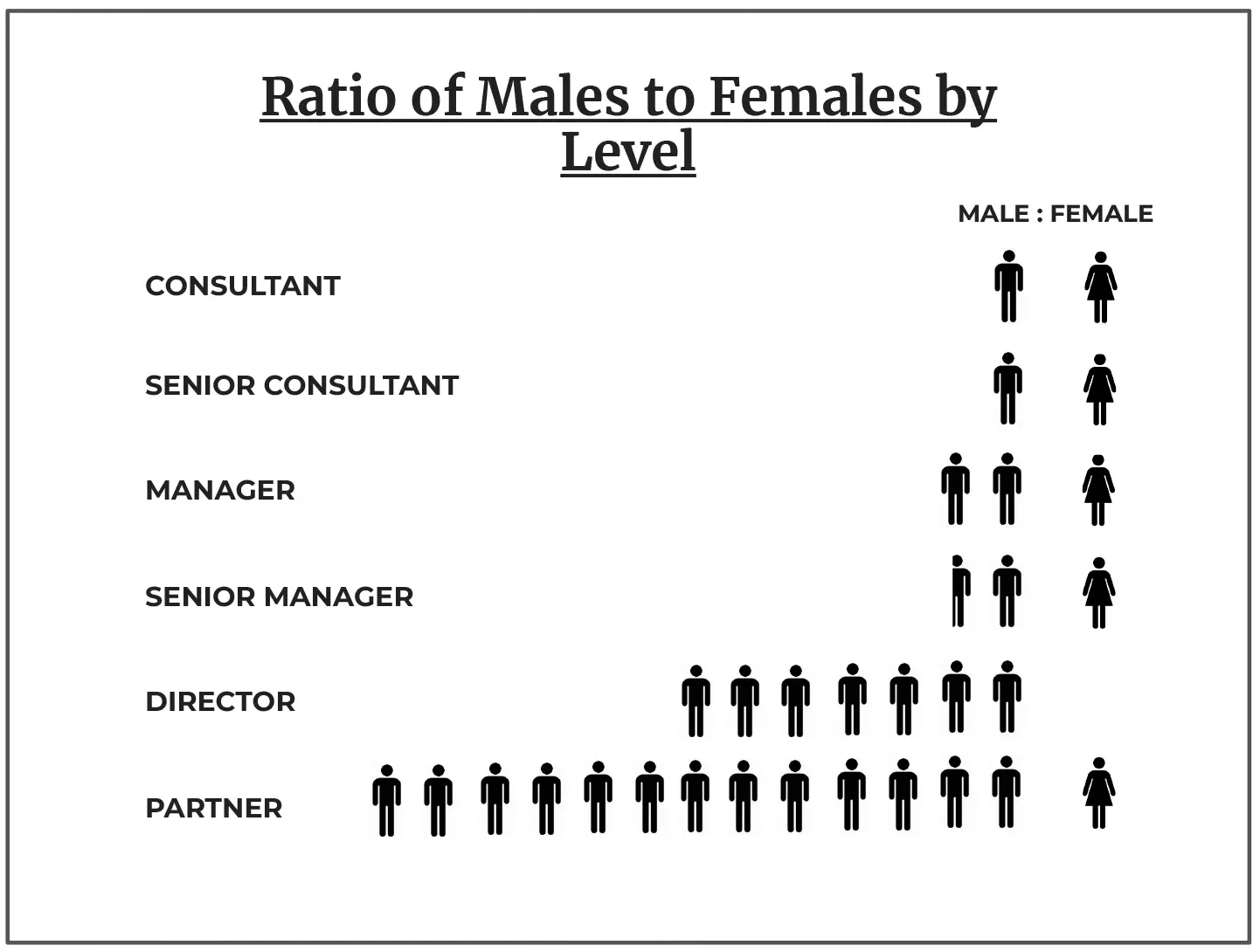
When I shared this with our leadership team, they were silent. Then our head of North America said,
“This is not who we are as a firm.
We have to do better.”
With that, we got huge buy-in to look at our processes and policies with a more inclusive and equitable lens.
Over time, this created a movement, one that not only benefited women but also benefited anyone who wasn’t the traditional mold for that firm. We had a work environment that became welcoming and supportive of LGBTQIA+ employees, employees of color, single parents, fathers who wanted schedule flexibility, caretakers of aging parents, people who wanted to take a sabbatical, and more. Our retention improved drastically, our engagement went up, and we promoted more women, people of color, and LGBTQIA+ employees into senior roles, including partner. And we had our most profitable years on record once we had this in place. Long before the business case for DEI work was researched, we proved it ourselves.
We did not start this work as an organized, strategic initiative. It began much more grassroots, and we came together as a small group within our organization to try to remedy a problem. The turning point was that we moved from trying to figure out the problem as individual women to trying to solve it as an ERG, to mobilizing our senior leaders and the firm to tackle it as a strategic initiative. That was when real change happened.
To read more, purchase Do DEI Right on Amazon, Bookshop.org, or anywhere you buy books.
Want help? Contact us at hello@equity-at-work.com or sign up for our newsletter on Substack.