New Data Show Women Significantly Left Out In AI Hiring
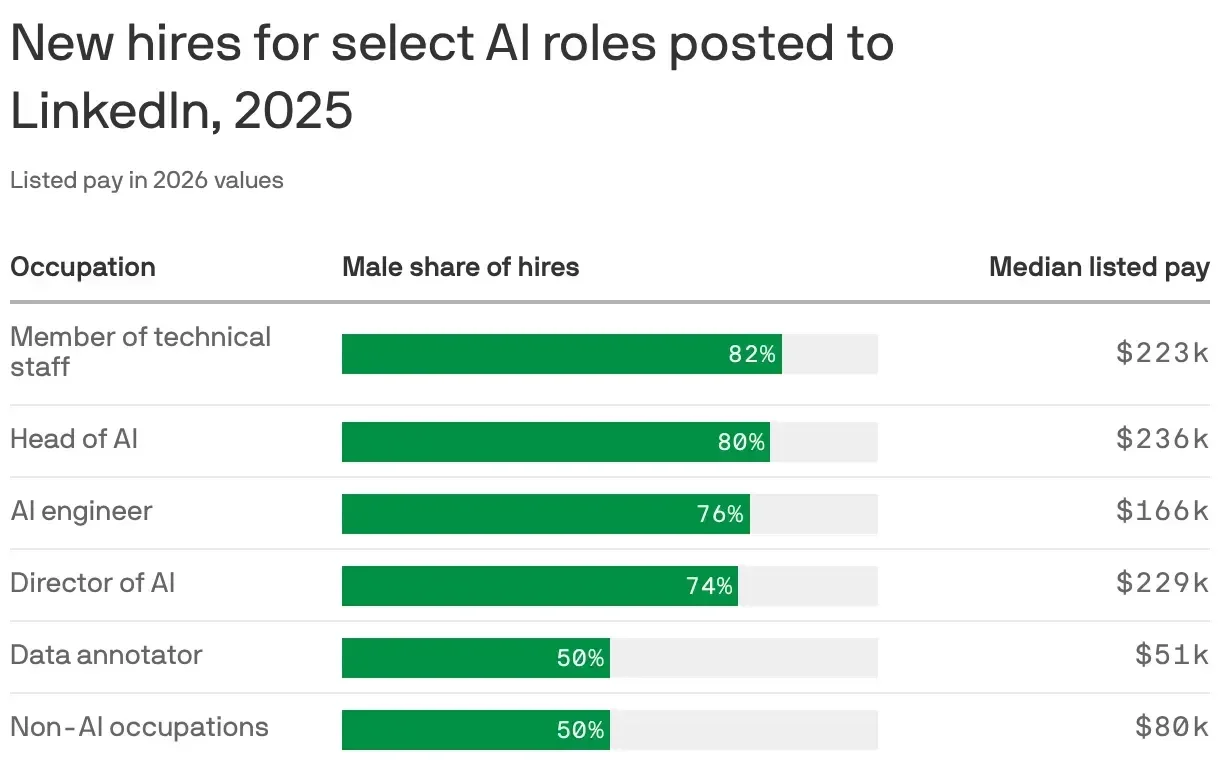
LinkedIn just released new data about hiring trends for AI roles, and it is sobering. The balance of women to men is equal only in the lowest level, lowest-paid AI roles, and skews heavily in favor of men at the Engineer, Director, technical staff, and Head of AI levels.
Source: LinkedIn, August 2026
This means that the vast majority of the people who are leading and directing the AI work, engineering the products, and doing the technical design and testing are male. This creates a massive opportunity for bias, intentional or not, because there is a huge gap in female perspectives in all of those activities.
Let’s step back and compare this to the distribution of women’s roles overall. McKinsey and LeanIn do an annual study on women in the workplace. While this isn’t apples-to-apples because the data sets are not identical, it can give us a directional comparison of male-to-female representation across roles.
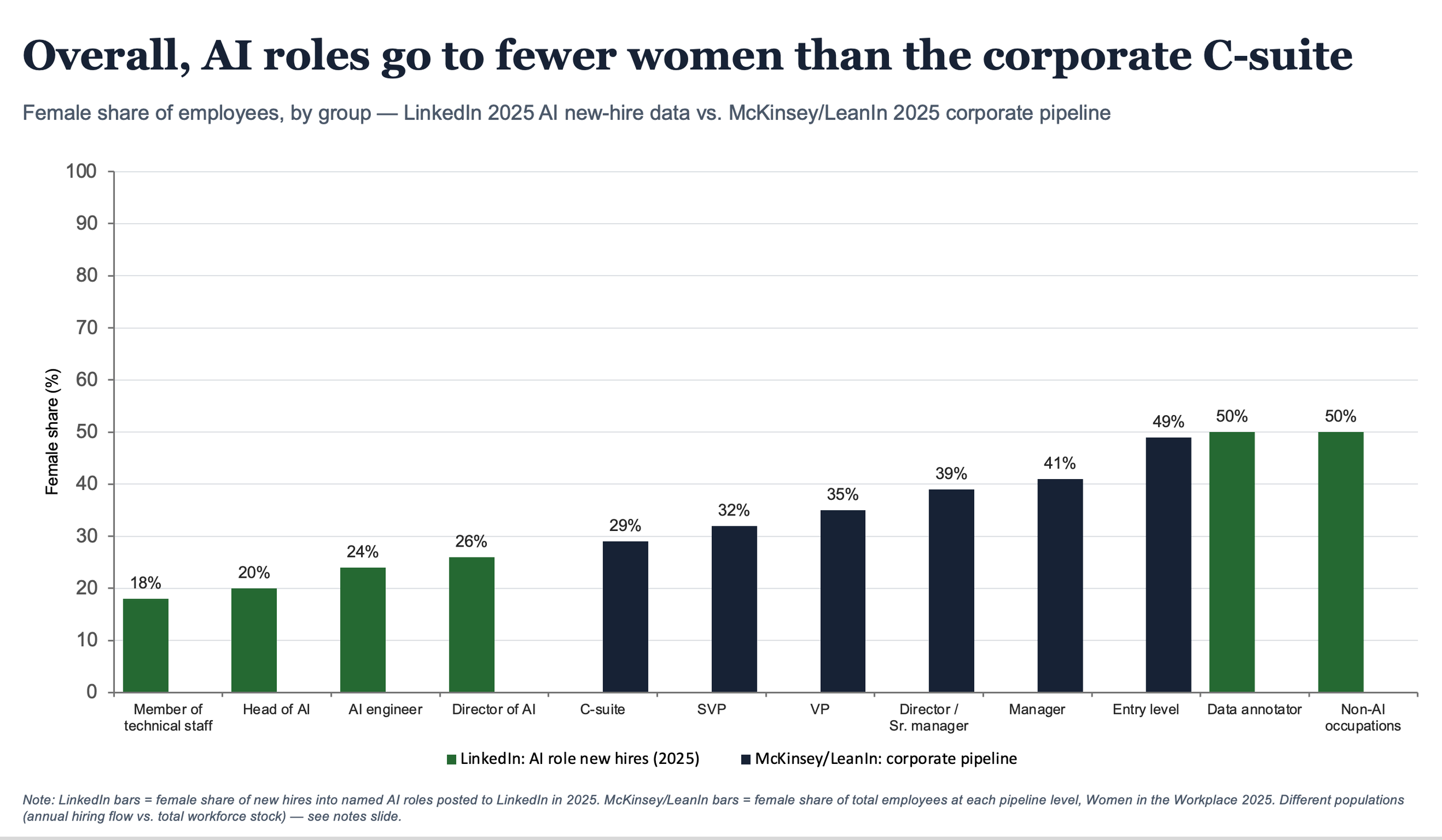
Essentially, this tells us there is a higher percentage of women in C-suite roles than there are in any of the AI leadership, design, or development roles. The only place of parity currently is in entry-level data annotator roles.
Digging into the McKinsey/LeanIn data on the technology sector, where most AI development is currently occurring, we see that AI is trending even more male than tech overall, aside from entry-level data roles, where there are more women.
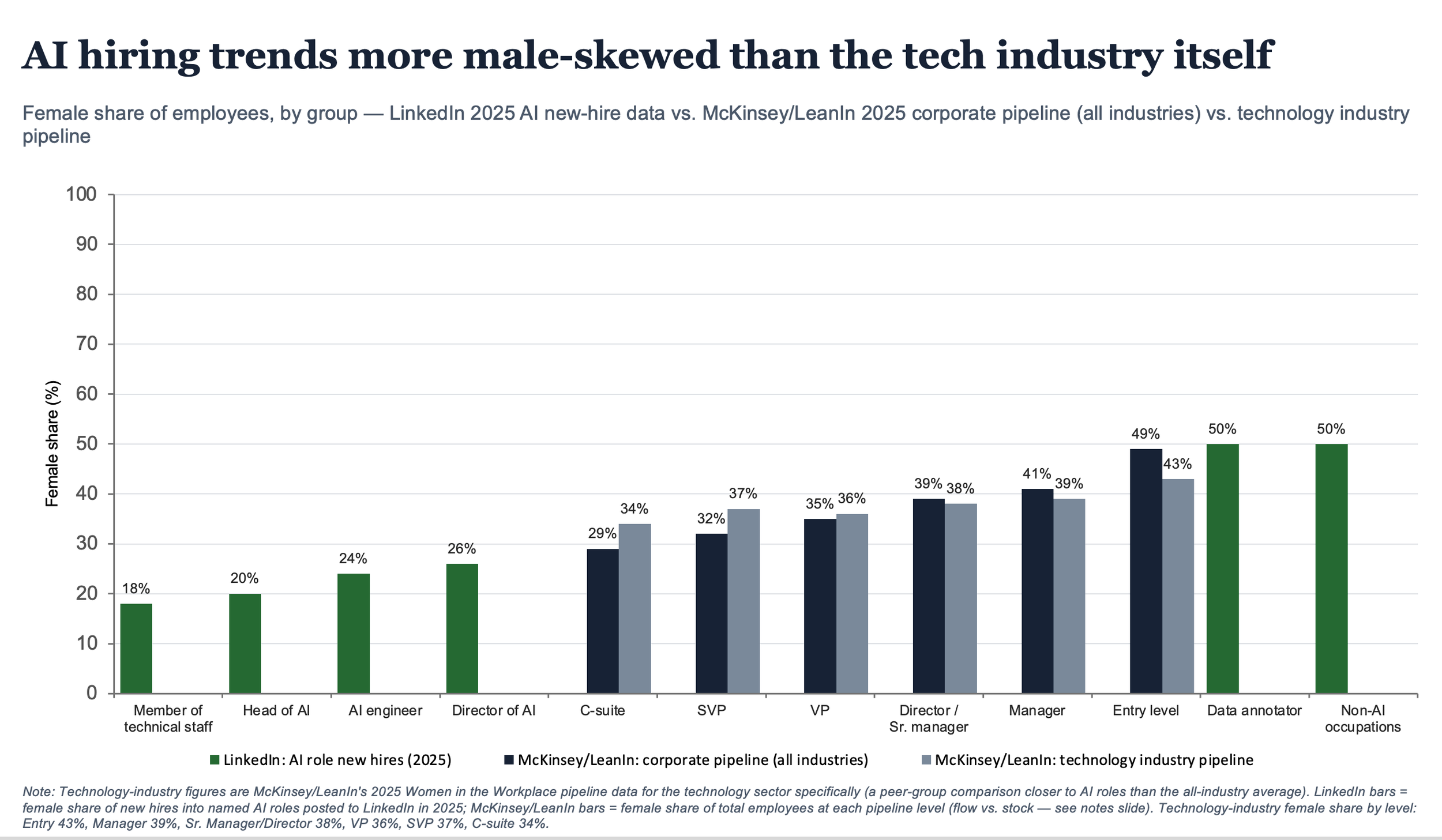
Women want these roles - and you can see above that more women are in VP, SVP, and C-suite roles in tech than across the total of all industries. And the high percentage of women in data annotator roles indicates there is strong interest in working in AI among the newest women in the tech workforce.
Bias in AI is a serious risk, especially with the rise of agent development that minimizes human intervention. The best problem-solving, risk mitigation, and innovation come from multiple perspectives on an issue. Without a balance of male and female perspectives, we are greatly limiting the potential of AI to advance our organizations. We of course need much more than just gender balance - we need different perspectives that come from all kinds of demographic, socio-economic, geographic, and other experiences. But if we can’t even get women in the room, we’re starting from a very limited and risky place.
Are you hiring into roles? Demand to see more female applicants, and ensure you have stripped the bias out of your outreach, recruiting, hiring, and compensation practices. Are you hiring AI companies? Demand that they bring diverse teams to the table for your work, not only at the entry level but in all key leadership and development roles. Put those expectations in your RFPs and contracts, so you have a forcing mechanism for the AI companies to truly follow through. And continue to push for more diversity overall, beyond gender, so we can get all the necessary perspectives into the design, development, and deployment of these tools.
Want help? Contact us at hello@equity-at-work.com or sign up for our newsletter on Substack.