
What the US Unemployment Numbers are Really Saying, and How They Impact the Employed
There has been a lot of conflicting messaging coming out about the employment numbers, so I decided to dig in and see what is happening for myself. What I saw gave me pause, not just for the state of the job market and unemployment, but also for what leaders need to be doing to address the impact on their employees.
This is a snapshot of the number of jobs added or lost each year, from 2010 to today:
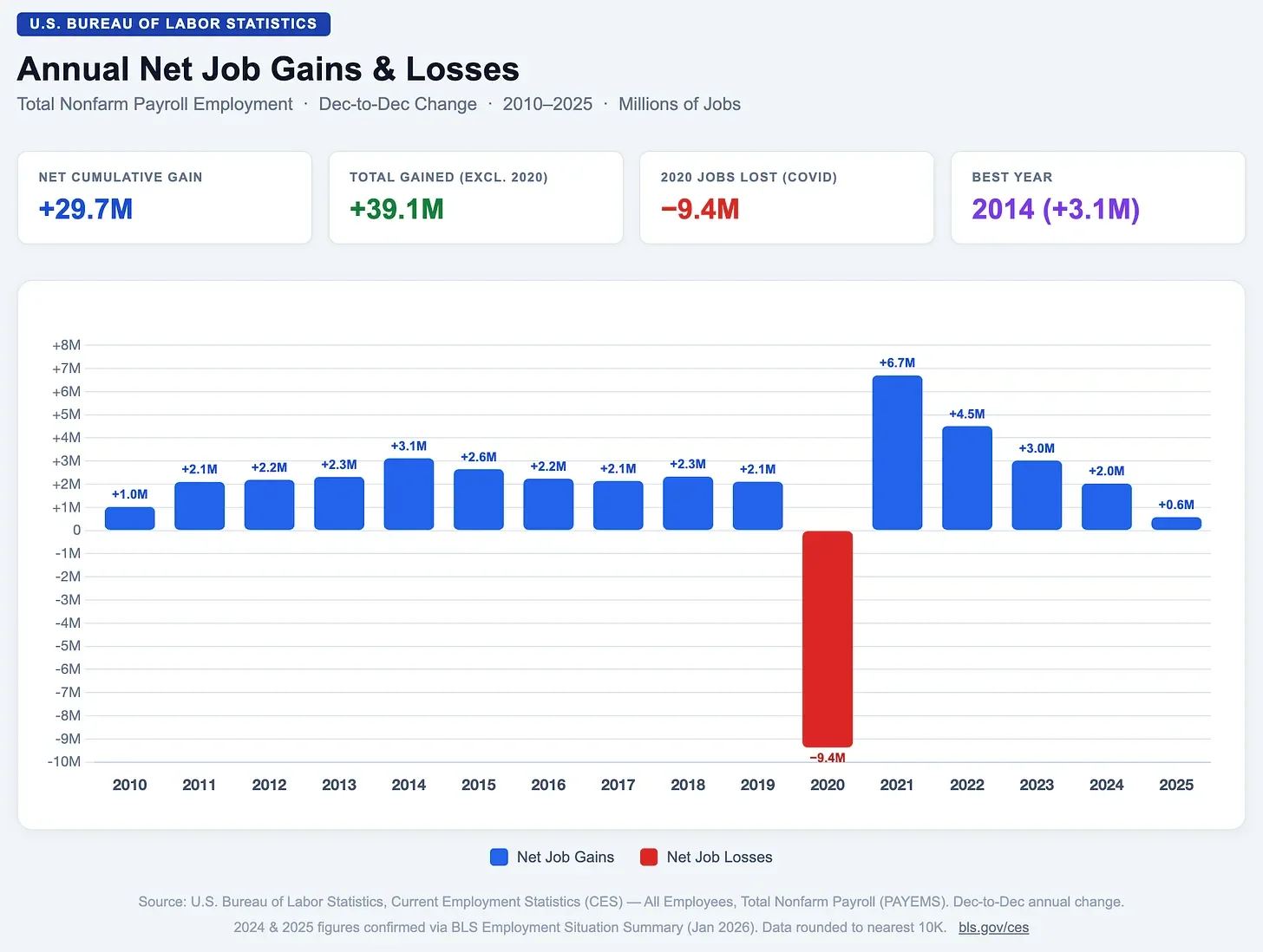
By the end of 2022, we had more than recouped the jobs lost during COVID-19. However, the rate of job increases has been slowing dramatically since then.
2025 had the lowest annual job gain since 2010, following the 2009 recession.
Looking at unemployment, by Q2 2022, it stabilized at 3.5-3.6% for about 5 quarters:
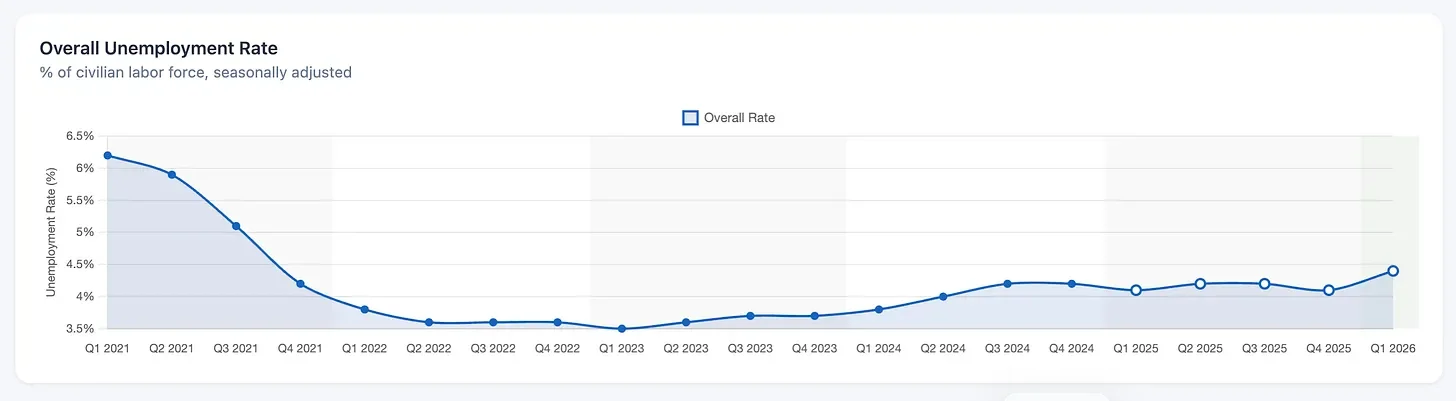
However, starting in Q2 2024, total unemployment rose to 4% and has stayed there or higher since.
Q1 2026 data show unemployment at 4.4%, its highest level since Q4 2021.
When you look at this data together, you see a coupling of low new job creation and higher unemployment, which means people who are out of work have fewer opportunities to find work and stay unemployed longer.
It also means that people who are in jobs they want to leave will have a hard time doing so, given the tightness and competitiveness of the market. They will also be scared to leave without a new job in hand, given how long people are currently staying unemployed:
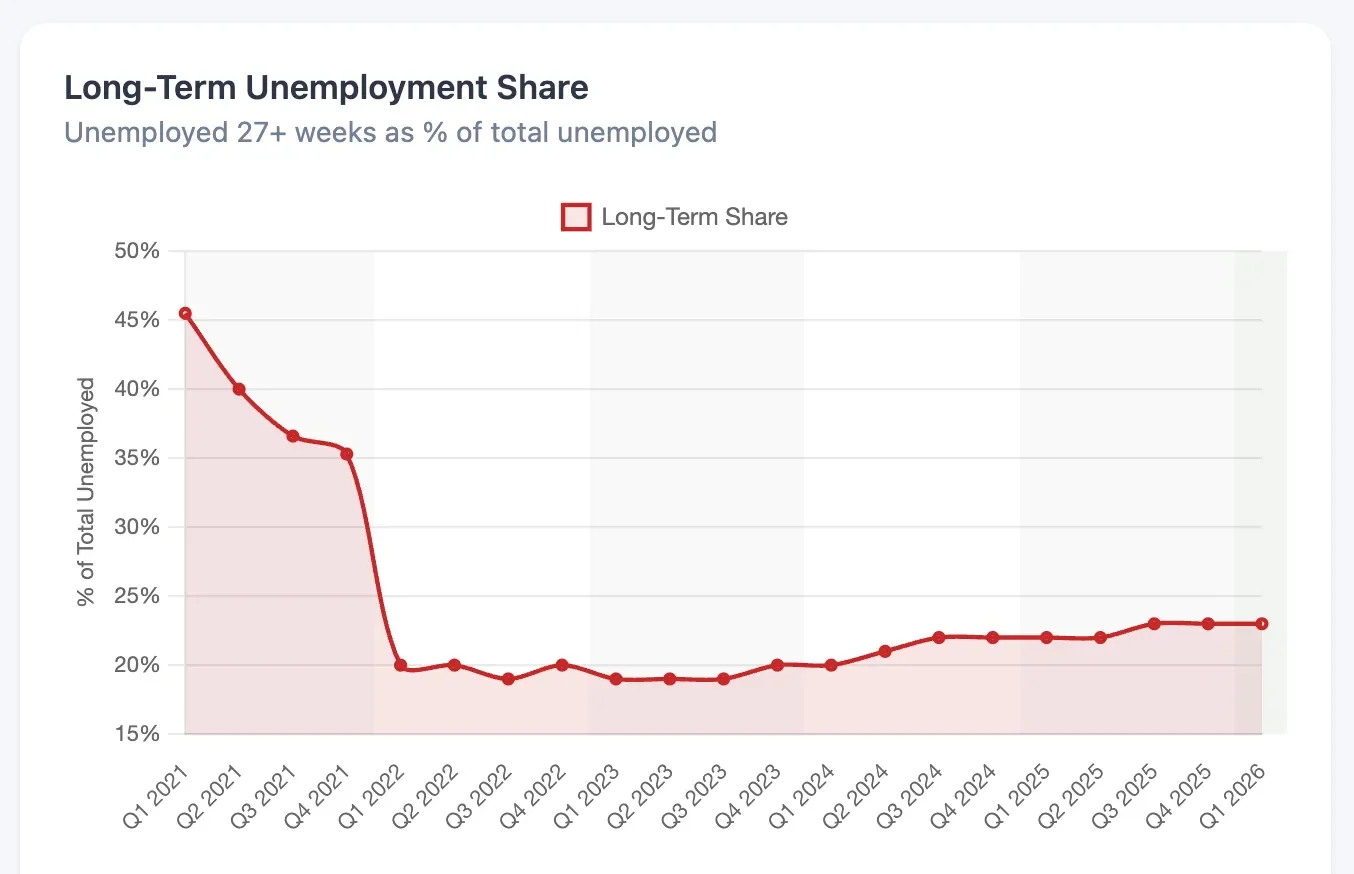
While we are nowhere near the post-COVID long-term unemployment level of 45%, we have slowly been creeping back up from the high teens of 2023 to 23% of unemployed people staying unemployed for 27 weeks or longer, and have stayed steady there for the last 3 quarters.
Almost a quarter of the working population is out of work for half a year or longer.
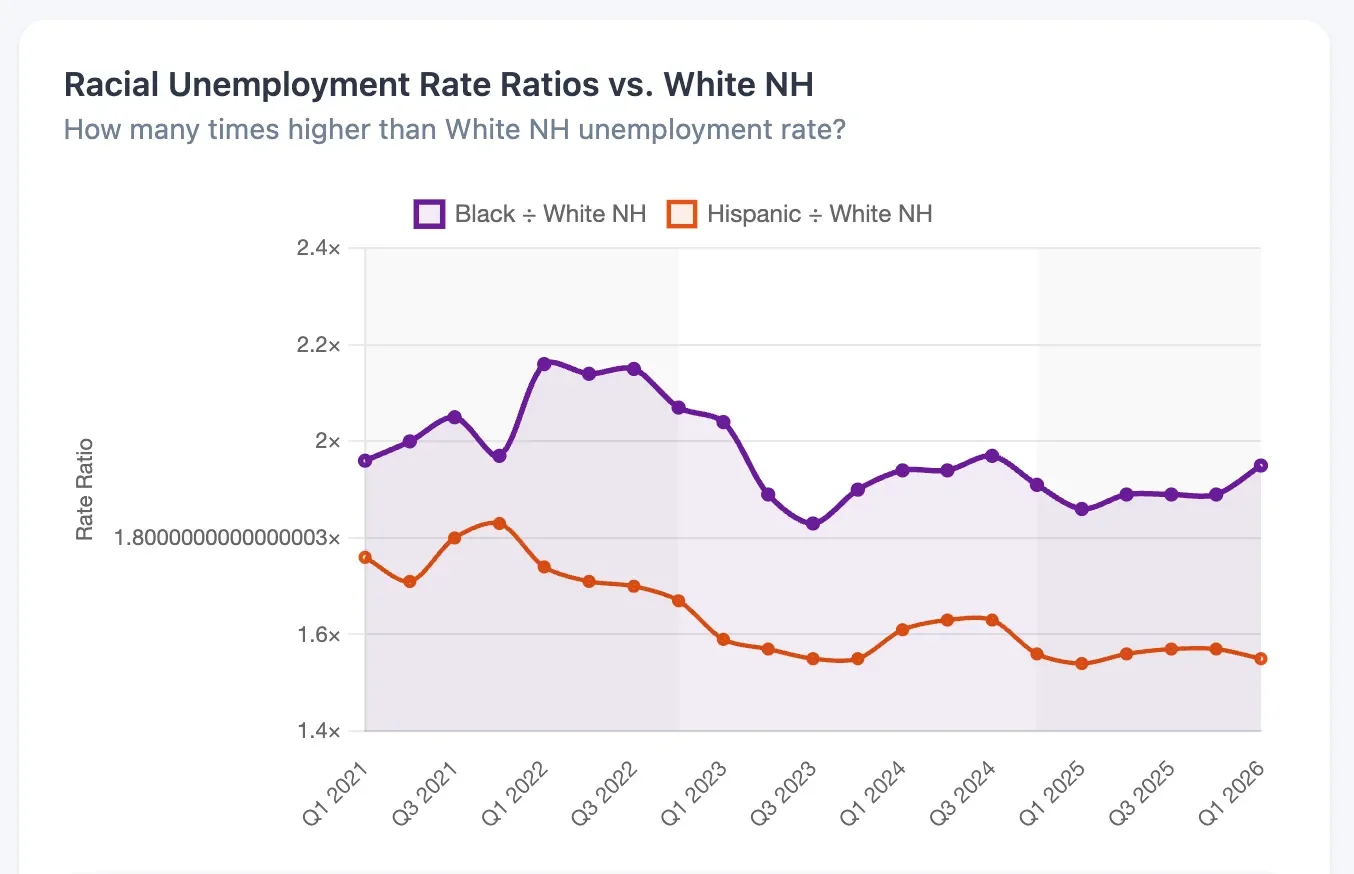
Most disturbingly, these unemployment numbers are far from equally spread across racial demographics. Black and Hispanic workers are unemployed at a much higher rate than their white and Asian counterparts, with Black workers’ rates at close to double those of white workers, and Hispanic workers’ 1.5x those of their white counterparts.
Looking at unemployment by gender, men and women are more closely intertwined in their fluctuations. But again, when you add in race, Black men and Black women have significantly higher rates than overall men and women, as you can see in the changes from the post-COVID stabilization in Q2 2022 to now:
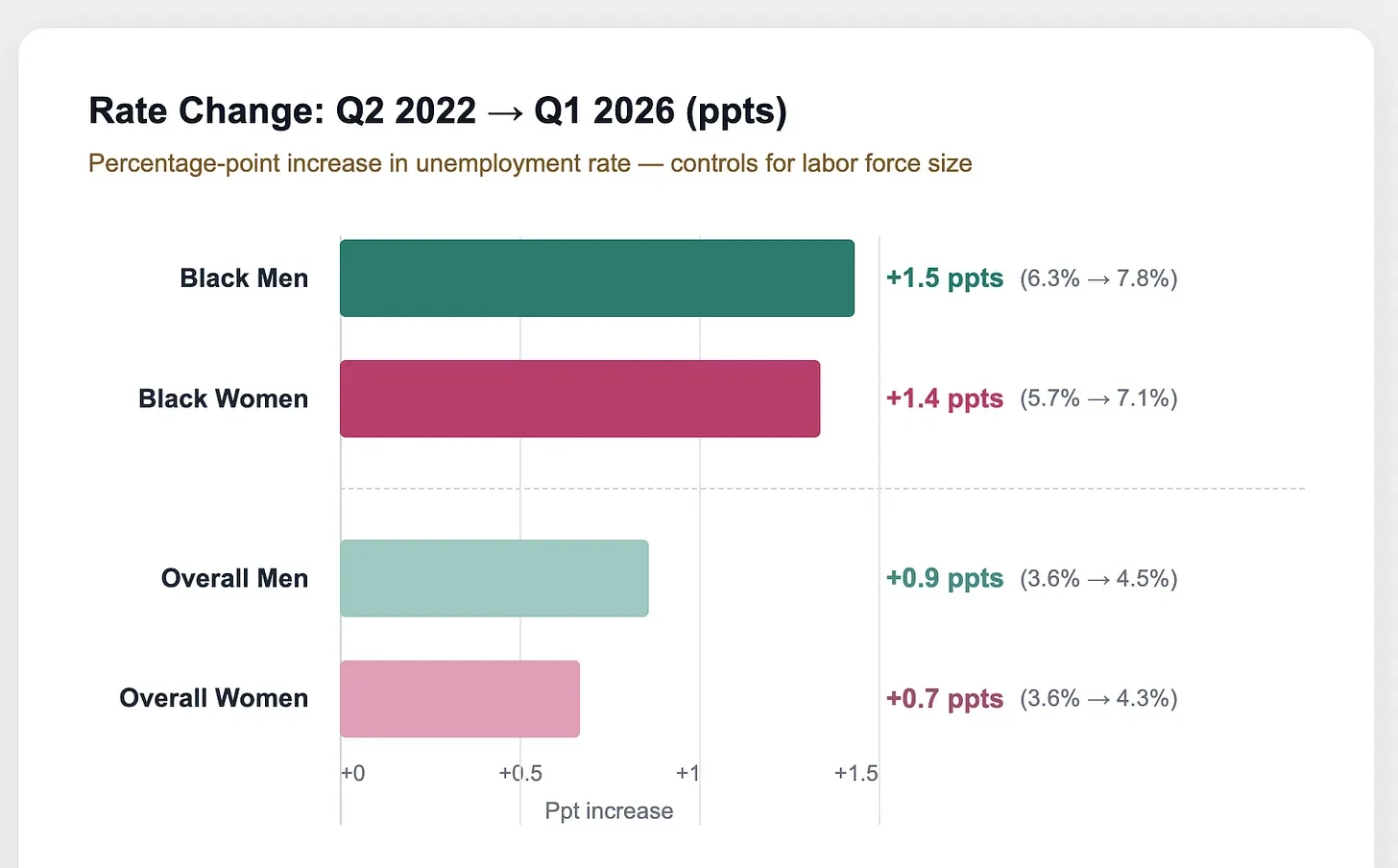
Hispanic and Black unemployment is 1.5-2x higher than white unemployment.
Black men and women are carrying a significantly disproportionate amount of the unemployment burden at rates above 7%.
Finally, underemployment is also a serious issue. Shifts to part-time work had been decreasing in the last few months, only to spike in March of 2026. The percentage of employees who want full-time hours but have been moved to part-time due to business conditions increased by 20 percentage points in one month. The percentage of workers moving to part-time work due to childcare, illness, family responsibilities, and other personal needs has fluctuated each month so far in 2026, rising as high as 3.5%. These trends in underemployment indicate pressure both within and outside the workplace and are often a sign of more unemployment to come.
So what does this all mean to those of us who are still employed? There are four key things you need to consider:
Low job creation, plus the highest unemployment rate in 4 years, means more people will stay unemployed and underemployed longer
This is impacting the children, spouses, partners, families, and friends of your employees, as well as the communities you live and work in
Any workers you moved to part-time due to a lack of adequate full-time work will largely be unable to sustain a part-time role economically, will leave if they can find full-time work elsewhere, and will be disengaged until they do
Employees who are full-time but want to leave are feeling trapped, are likely not at full engagement and productivity, and will create significant voluntary turnover if/when the job market loosens up
Here is what to do:
Practice regular active listening with your employees about these issues through surveys, office hours, suggestion boxes, and town halls. Provide confidential channels for employees to share feedback and seek support. Establish feedback loops to share what you are hearing and how you are responding.
Ensure you have stripped the bias out of your hiring, review, and promotion processes so you are not contributing to the racial disparity shown here. Add checks and balances to your processes. Be diligent in the language you use. Set standard criteria for performance and evaluation. Black, Hispanic, and female workers are often the first to have their jobs eliminated or their hours reduced - don’t be part of this story.
Audit your benefits to make sure your employees are getting what they need right now, including
Financial planning
Mental health stipends
ERGs and other internal groups for support and advocacy discussions
Emergency financial support for family members
Job search support for family members
Volunteering and community outreach opportunities to help your communities
A final note related to culture. This is the time to show your people you are there for them. Many women and people of color have lost access to support and opportunities as a result of how their employers have responded to the current Administration’s anti-DEI actions. When things loosen up, you want to have as little pent-up negativity regarding how employees have been treated and the opportunities provided to them.
We all want our employers to do right by us, given how much time and energy we pour into work. Make sure you find a way to keep doing that.
Want help? Contact us at hello@equity-at-work.com or sign up for our newsletter on Substack.