Keep Your Eye on your Employees in this Hyper-Polarized Time
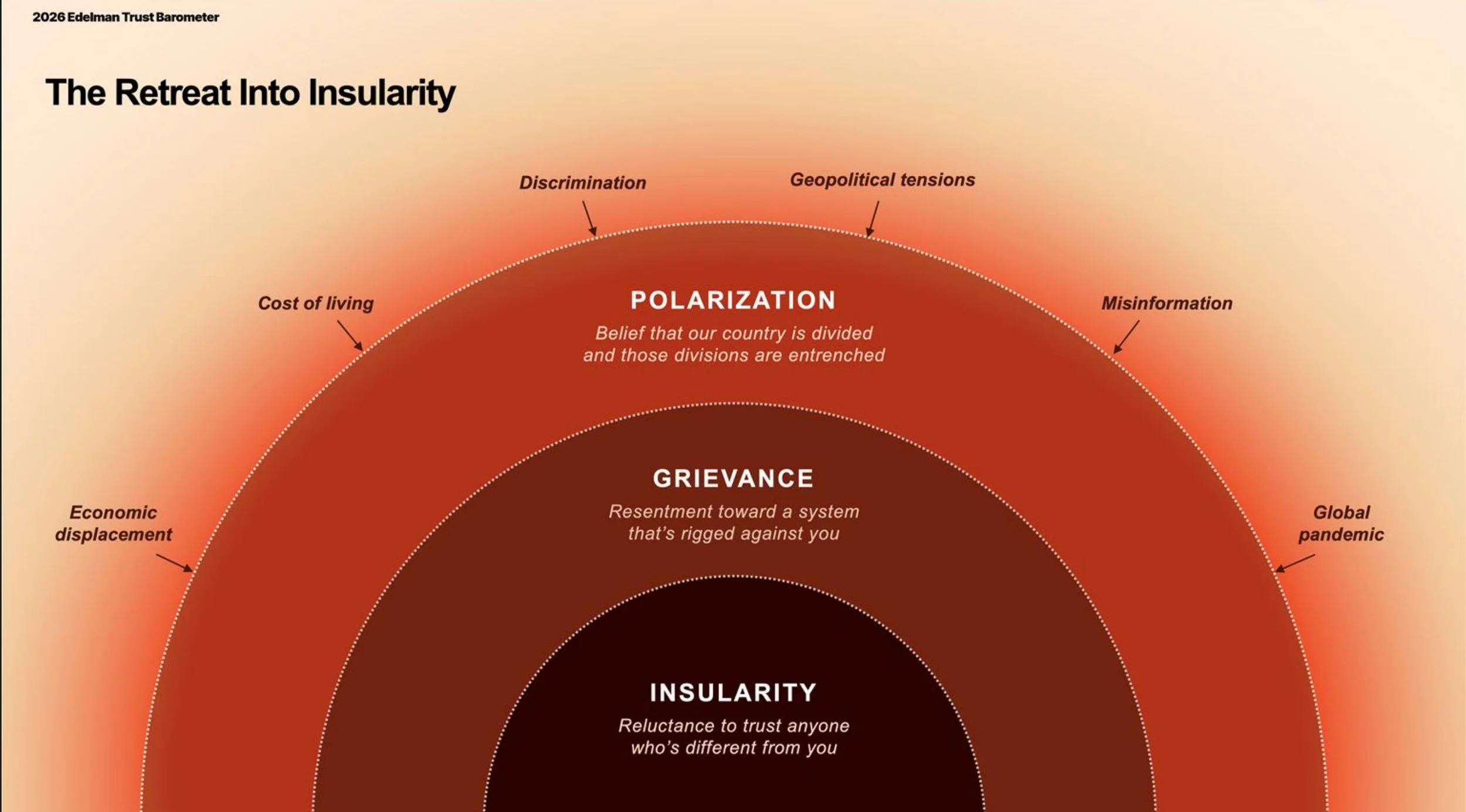
Edelman’s 2026 trust barometer highlights a severe change in the workplace, showing how we have moved beyond polarization and grievance into insularity, with “70% of respondents not wanting to talk to, work for, or even be in the same space with anyone with a different worldview.” In other words, we are in a crisis of trust at work.
Here are two specific statistics that stood out to me from the report:
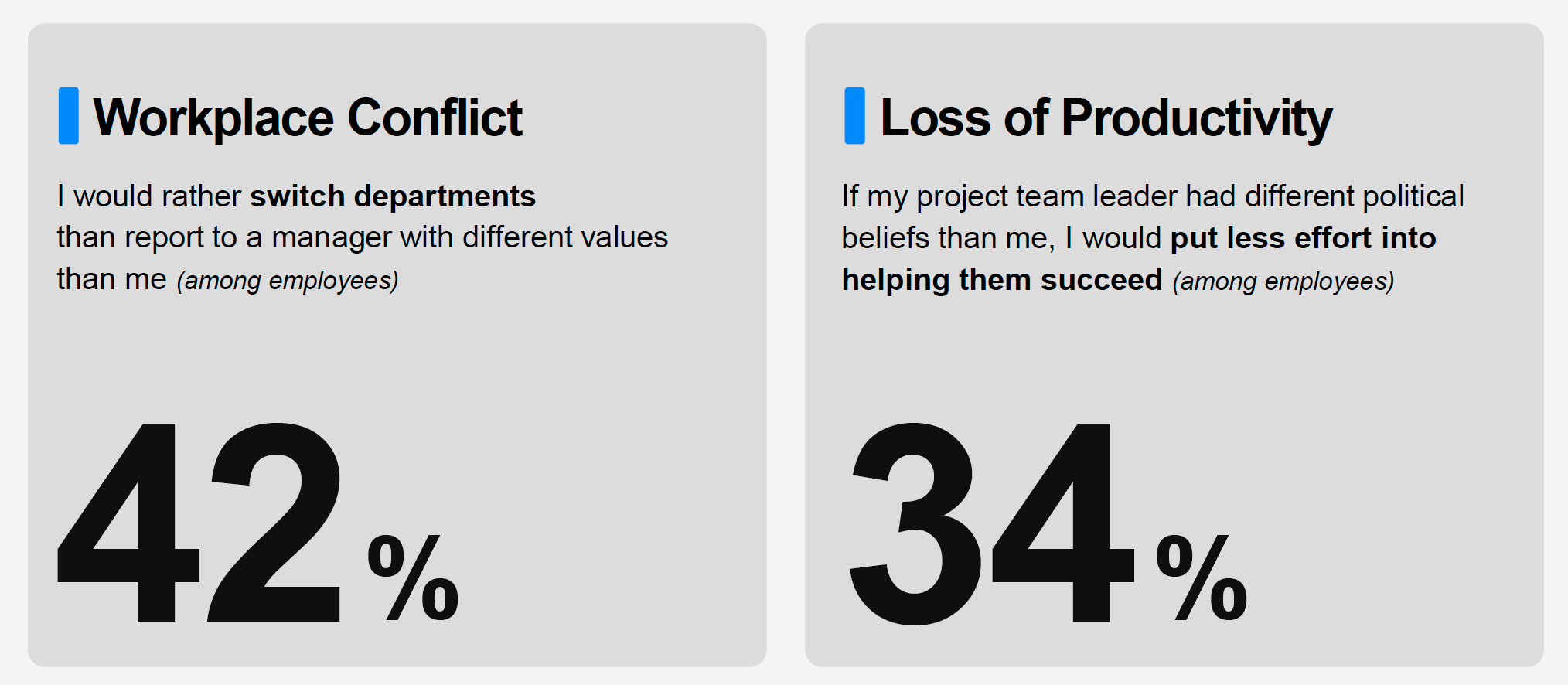
When 42% of people are feeling so triggered by a manager who doesn’t share their values that they would rather move to a different department, we have an extreme lack of psychological safety. 34% of employees putting in less effort for bosses with different political views sends the same message.
The divisiveness we experience externally, primarily stoked by the current political environment, is not checked at the proverbial door at work. It’s too extreme and constant to turn it off or tune it out all the time. This is destroying inclusion and, therefore, engagement and productivity.
Establishing a policy of no politics in the workplace is not going to prevent or solve this issue because people are, by and large, not judging their value or political alignment based on deep conversations. Instead, they are looking for signals that indicate alignment and jumping to conclusions from there.
That brings us back to bias, which so many organizations have worked hard to mitigate in recent years. And this time, it is not unconscious; it is being actively sewn into us by the current political landscape.
Bias destroys trust and respect. It makes it almost impossible to focus on your job because it is a judgment on how you show up at work, not on the quality of your work. It is an assumption that because you “look” or “sound” like someone from one political party, that you must embody everything that party stands for in its extreme.
Leaders need to recognize that this is a crisis that will not fix itself. Left unaddressed, these sentiments will fester and grow, and will create divides that make the statistics above look minimal. Then you will have people actively undermining each other at work and harming one another’s performance and careers as a way to lash out. It’s a terrible downward spiral that we do not want to teeter on the edge of.
So what can you do?
Listen actively to your employees across all levels, functions, locations, and demographics, and determine if this is happening in your organization
Analyze the feedback - Are there trends? Themes? Places where this is and is not happening? Why is that?
Align what you are hearing with your values - how far off are you from where you want to be?
Call a spade a spade. Acknowledge if this is happening, how it is playing out, and that leadership is working hard to rebuild trust, respect, and psychological safety
Establish norms and behavioral expectations
Share (or develop and then share) the process for escalating issues related to bias and disrespectful behavior
Model good listening
Have coaches work with leaders to rebuild the right habits and address the issues
Hold leaders accountable for driving the right behaviors on their teams
Measure your progress through ongoing feedback loops
Communicate, communicate, communicate to keep this all front and center
Remember - this will not fix itself. And we can’t wait for a change in the current administration to address this. Three years of insularity will destroy your business.
Want help? Contact us at hello@equity-at-work.com or sign up for our newsletter on Substack and get DEI insights from Equity At Work™ first.
Read the full report here: Edelman 2026 Trust Barometer
#EquityAtWork #DoDEIRIght #YourDEIMinute #inclusionmatters #diversityandinclusion #DEI #workplaceculture #belonging #diversityequityinclusion #inclusionforall #inclusiveleadership #polarization #employeeengagement #employeeexperience #workplaceconflict #insularity